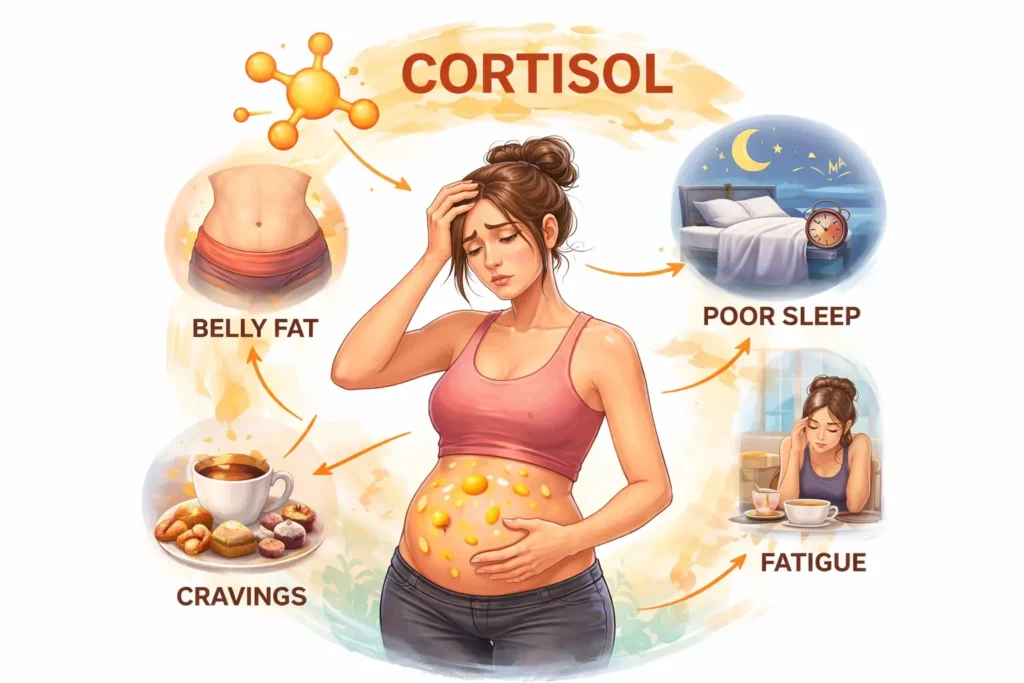
If you are struggling to lose weight after 30, you are not alone. Many adults notice stubborn belly fat, slow progress, fatigue, and even mood swings, despite eating healthy and exercising regularly. One of the main culprits is high cortisol, the stress hormone that silently blocks fat loss, slows metabolism, and increases abdominal fat.
Understanding cortisol and how to manage it is essential for anyone struggling to lose weight after 30 cortisol-related issues. By making small, consistent lifestyle adjustments, you can finally see sustainable results. For a comprehensive hub of guidance for fitness after 30, visit the Fitness After Thirty Homepage.
What Is Cortisol and Why Does It Matter for Those Struggling to Lose Weight After 30
Cortisol is a hormone produced by the adrenal glands in response to stress. In small bursts, it is beneficial — regulating blood sugar, controlling inflammation, and supporting metabolism. However, chronically high cortisol has a darker side.
When cortisol remains elevated over time, it can interfere with your body’s ability to burn fat, build muscle, and recover from workouts. This is why many adults are struggling to lose weight after 30 cortisol-related challenges.
Factors that raise cortisol after 30 include:
- Work pressure and long hours
- Family or caregiving responsibilities
- Poor sleep or irregular schedules
- Overtraining in the gym
- Emotional stress and anxiety
According to Harvard Health, chronic cortisol elevation can impair metabolism and increase abdominal fat — a common issue for adults over 30.
Why Weight Loss Becomes Harder After 30: Cortisol Issues Arise
As we age, our bodies prioritize survival over aesthetics. High cortisol signals danger, prompting the body to store fat, especially around the abdomen.
Here’s what happens:
- Cortisol increases blood sugar for energy.
- Insulin rises to manage this sugar.
- Excess sugar is stored as fat, mostly in the belly.
Abdominal fat has a higher density of cortisol receptors, explaining why stress belly fat after 30 is so common.
Common Signs You Might Have High Cortisol Blocking Fat Loss
High cortisol can mimic “normal aging,” making it easy to overlook. Signs include:
- Persistent belly fat despite regular exercise
- Cravings for sugar, caffeine, or salty foods
- Poor sleep or waking up feeling tired
- Anxiety or feeling constantly “on edge.”
- Low energy during workouts
- Slow recovery after exercise
Recognizing these symptoms is the first step toward effective intervention.
How Cortisol Blocks Fat Loss After 30
1. Cortisol Promotes Fat Storage
High cortisol tells your body to store fat rather than burn it, particularly in the abdomen.
2. Cortisol Breaks Down Muscle
Cortisol can break down muscle tissue to release glucose for energy. Less muscle means a slower metabolism, which makes fat loss harder for anyone struggling to lose weight after 30, and cortisol-related challenges.
3. Cortisol Disrupts Sleep
High cortisol can disturb your sleep cycle. Poor sleep further raises cortisol, creating a vicious cycle that blocks fat loss.
4. Cortisol Slows Recovery
When your body remains stressed, it cannot fully recover from workouts, leaving you tired and unable to progress efficiently.
Why Overtraining Can Backfire for People Struggling to Lose Weight After 30 Cortisol
It’s common to respond to stubborn weight by exercising harder. However, excessive HIIT, long cardio sessions, or overtraining can actually raise cortisol, making fat loss even more difficult.
For stress-conscious exercise tracking and recovery, check:
👉 Fitness Band Guide After 30
Best Cortisol-Friendly Exercises for Adults Over 30
Intelligent exercise balances calorie burn, muscle building, and stress reduction. Cortisol-friendly activities include:
- Brisk walking (30–45 minutes per day)
- Strength training 3–4 times per week
- Yoga or mobility exercises
- Swimming or cycling
- Stretching and deep breathing
Walking is particularly effective, as it reduces cortisol while improving insulin sensitivity — making it ideal for anyone struggling to lose weight after 30, with cortisol issues.
Lifestyle Habits That Naturally Reduce Cortisol
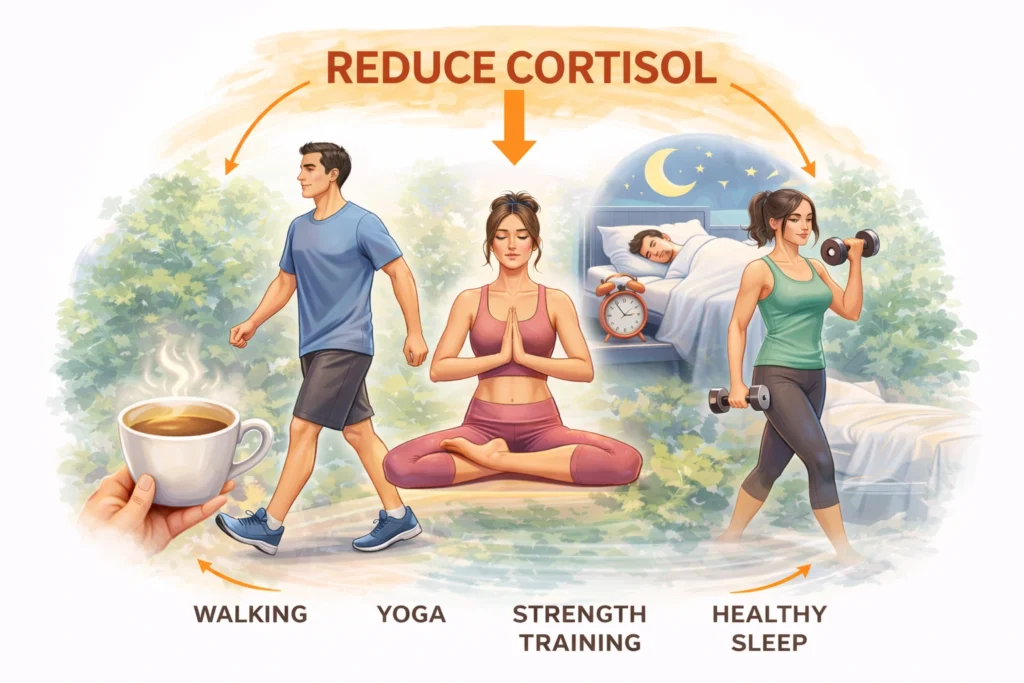
Exercise alone isn’t enough; lifestyle changes are critical.
1. Prioritize Sleep
Aim for 7–8 hours of quality sleep nightly. Poor sleep directly increases cortisol (WHO on stress and health).
2. Eat Balanced Meals
Avoid skipping meals, which can spike cortisol. Focus on protein, fiber, and healthy fats to stabilize blood sugar.
3. Reduce Stimulants
Caffeine, sugar, and alcohol can increase cortisol. Moderation is key.
4. Schedule Recovery Days
Rest is essential for balancing hormones and preventing chronic stress.
Real-Life Examples of Managing Cortisol After 30
Even public figures illustrate how stress and recovery affect long-term health:
These examples show that managing stress and recovery is as important as fitness routines for adults struggling to lose weight after 30, cortisol issues.
Tracking Fitness Without Raising Cortisol
After 30, fitness should support life rather than stress it. Monitoring sleep, recovery, and readiness prevents cortisol overload.
For structured fitness validation, check:
👉 Physical Fitness Certificate 2026
Science Behind Cortisol and Weight Loss
Research confirms that chronic stress significantly contributes to weight gain. Authoritative sources such as Harvard Health and Mayo Clinic show that cortisol impacts fat storage, insulin sensitivity, and metabolism, reinforcing the need for effective stress management strategies.
Final Takeaway: Weight Loss After 30 Is Hormonal, Not a Discipline Issue
Weight struggles after 30 are often hormonal, not due to a lack of willpower. By lowering cortisol through:
- Smarter workouts
- Better sleep
- Stress management
- Recovery-focused fitness
…you can finally achieve lasting fat loss. For a full overview of fitness after 30, visit the Fitness After Thirty Homepage.
Frequently Asked Questions (FAQs)
❓ Can high cortisol really prevent weight loss after 30?
Yes. Chronic cortisol promotes fat storage, muscle breakdown, and slower metabolism.
❓ How long does it take to lower cortisol naturally?
With proper sleep, stress management, and smart exercise, cortisol levels can improve within 2–4 weeks.
❓ Is walking better than gym workouts after 30?
Yes. Walking reduces cortisol while supporting fat metabolism, especially when combined with strength training.
❓ Should I stop HIIT completely?
No, but limit HIIT to 1–2 sessions per week and prioritize recovery.
❓ Can tracking devices help manage cortisol?
Yes. Fitness bands and rings monitor sleep, recovery, and stress levels, helping prevent overtraining.
❓ Can diet alone control cortisol?
Balanced meals, avoiding skipped meals, and limiting stimulants can help, but lifestyle habits and stress management are equally important.
❓ How does stress cause belly fat?
Cortisol signals your body to store fat in the abdomen, which is why belly fat persists even with diet and exercise.
6 thoughts on “Struggling to Lose Weight After 30? Cortisol Could Be the Reason”